Our devices are constantly “talking” – even when they’re supposed to be off. Phones ping cell towers, car keys broadcast signals, and credit cards can be scanned from a distance. In 2026, with smarter AI surveillance and increasingly sophisticated cyber threats, simple tools like Faraday bags have become one of the easiest and most effective ways to protect your privacy and security.
Think of a Faraday bag as a portable signal shield – a protective bubble that stops wireless signals from getting in or out.
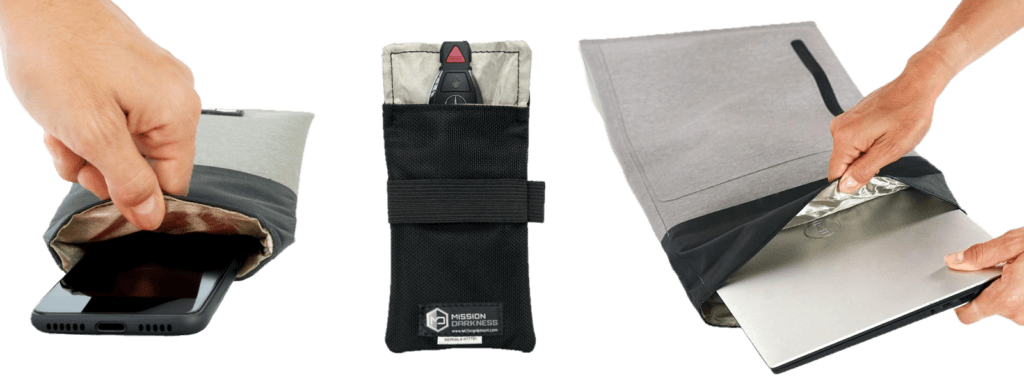
Whether you’re a parent wanting screen-free time for your kids, a traveller concerned about data theft, or simply someone who wants more control over your digital life, Faraday bags offer straightforward, no-fuss protection. They’re particularly useful in Australia, where privacy laws emphasise protecting personal information and concerns about tech-facilitated abuse continue to grow.
A Faraday bag creates a complete barrier around your devices (phones, laptops, car keys, credit cards, passports, etc.), making them invisible to the outside world.
Named after scientist Michael Faraday, these bags work using the same principle he discovered in the 1800s: conductive materials can block electromagnetic fields (EMF) and radio frequencies (RF).
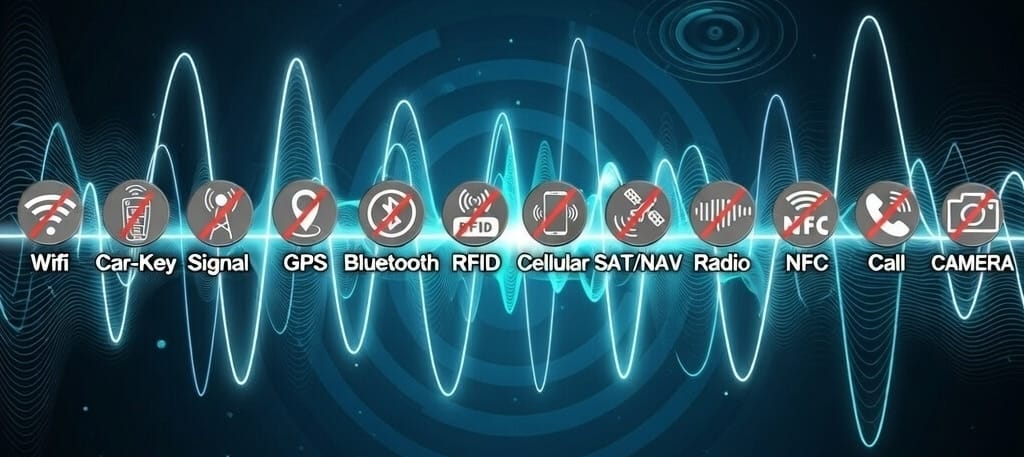
How it works in simple terms:
Modern Faraday bags are lined with special conductive fabrics (usually layers of copper, nickel, or aluminium). When wireless signals (Wi-Fi, Bluetooth, GPS, mobile networks, or NFC/RFID) hit the bag, the metal reflects and absorbs them, effectively cancelling the signal. As long as the bag is properly sealed and made of quality materials, nothing gets in or out.
Real-world test: Put your powered-on phone inside a good Faraday bag, seal it, and have someone try to call you. The call won’t go through. The same applies to Bluetooth, Wi-Fi, and GPS signals.
Bags come in many sizes – from small pouches for keys and cards to larger ones for laptops and tablets. Most quality versions are lightweight, waterproof, and durable.
1. Stronger Privacy Protection
Your phone is essentially a tracking device that constantly communicates with networks – even when you think it’s off. A Faraday bag instantly stops all wireless signals, preventing location tracking, data leaks, and unwanted connections.
This is especially useful for:
2. Protection Against Theft and Hacking
Relay attacks (where thieves boost the signal from your car key fob) are a growing problem. A Faraday bag completely blocks the signal, making it much harder for thieves to unlock and steal your vehicle.
The same protection applies to:
3. Reducing Unwanted EMF Exposure
While research on the health effects of electromagnetic fields is ongoing and mixed, many people use Faraday bags as a simple way to reduce exposure – especially at night or around children. It’s an easy, low-effort step alongside other habits like using speakerphone or keeping devices away from the bed.
The good news is Faraday Bags are 100% legal here in Aus – no rules against using them for personal protection. They line up perfectly with Australia’s push for stronger digital resilience and the Office of the Australian Information Commissioner’s guidelines on keeping personal data safe.
What to look for:
Quick test at home:
Place your powered-on phone inside, seal the bag completely, and have someone call it. If it doesn’t ring, the bag is working. Test Bluetooth and Wi-Fi connections too.
Pro tips for best results:
Myth-busting time, let’s clear up some confusion:
 Final Thoughts
Faraday bags are one of the simplest and most effective tools available in 2026 for protecting your privacy and security. They don’t require any technical setup, they’re completely legal, and they work immediately.
Whether you start with a small pouch for your keys and cards or a larger bag for your phone and laptop, adding a Faraday bag to your routine is a practical step toward greater digital resilience.
At PrivacyPros, we offer a range of high-quality, lab-tested Mission Darkness Faraday Bags designed to work seamlessly with our Privacy-tech solutions.
-> Explore Our Privacy Laptops
-> Browse Our Free Privacy Tools
Take control of your signals. Protect what matters.

Insights from Naomi BrockwellNaomi Brockwell, founder of ludlowinstitute.org and a leading advocate for our rights to privacy, explains in this video how faraday works and some important issues to consider. We highly recommend her Youtube channel for the continued excellence she provides with content and advocacy: