Imagine you’re deep in the bush, or a major storm knocks out power across your region. Your phone shows “No service.” No calls. No texts. No way to check on family, friends, or coordinate help.
This isn’t hypothetical. It’s happened during recent Victorian blackouts and is becoming more common with increasing extreme weather events in 2026. When traditional mobile networks fail, many Australians are turning to their own private communication systems using mesh networks.
Small, rugged devices using MeshCore create resilient, off-grid networks that work using only radio waves – completely free, with no SIM cards, mobile towers, or internet required. Messages hop from device to device (and through solar-powered repeaters) across hundreds of kilometres, even when everything else is down.
We’ve tested these systems extensively in Australian conditions, which is why we pre-configure every device with the latest MeshCore firmware before it reaches you.
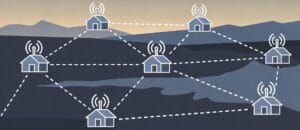
A mesh network works like a group of people passing a message through a crowd. Instead of one person shouting across a field, each person hands the message to the next until it reaches its destination. If one path is blocked (by hills, trees, or distance), the message automatically finds another route.
MeshCore is the Australian-optimised version of this technology. Developed by local legend – Melbourne’s Scott Powell (Ripple Radios) with help from an international team, was launched in early 2025. It was built for our wide landscapes, harsh conditions, strict radio rules and to build our community resilience.
MeshCore outperforms the older Meshtastic systems in ways that matter most to Aussies:
The official MeshCore apps (Android, iOS and web)turn your phone into a powerful coordination tool with group chats, live maps, shared calendars, and more – all running over the mesh network. Admins manage everything with simple QR codes and can revoke access instantly. The network heals itself – if one repeater goes down, messages just find another path.
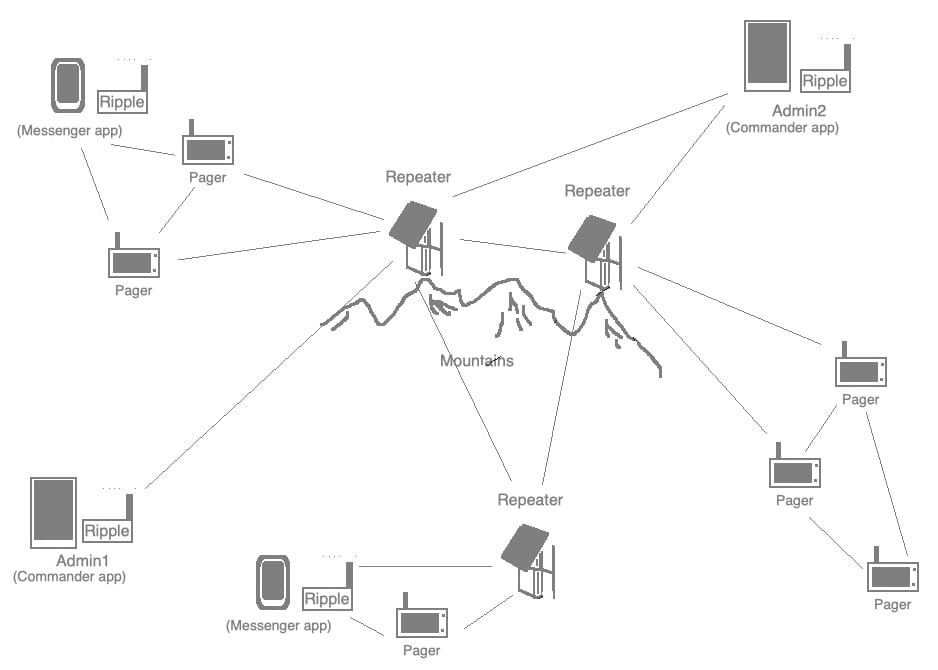
For example, picture a remote mountain community setup like in the diagram below from Ripple Radios (showing solar repeaters placed on hilltops across rugged mountains, linking scattered pagers, messenger apps, and two admins using the Commander app). Families and farmers on opposite sides of the valley stay in touch, share live locations, and coordinate help even when mobile towers are completely gone. One repeater on a high peak can suddenly connect an entire isolated area – perfect for bushfire evacuations, flood updates, or just everyday check-ins on remote properties.
Communities that switched report dramatic improvements. Melbourne’s MeshCore network now stretches over 1,000 km with dozens of solar repeaters and links to Sydney and Canberra. Groups that struggled with congestion on older systems now handle hundreds of users reliably.
For latest MeshCore node maps, see:
Everything runs on LoRa (Long Range) radio – a low-power technology that can transmit over long distances on very little energy.
No internet or mobile towers are needed. Messages routinely travel hundreds of kilometres through chains of repeaters.
Australia’s size and increasing extreme weather events make traditional networks vulnerable. Mesh networks provide a resilient backup that works when everything else fails.
Common use cases include:
Real Australian networks (such as the growing Melbourne mesh) now span over 1,000 km with dozens of solar repeaters, proving the technology works at scale and when mobile towers failed.
 Recommended MeshCore Devices (Pre-Configured for Australia)
We only stock devices proven in Australian conditions and pre-flash every unit with the latest MeshCore firmware:
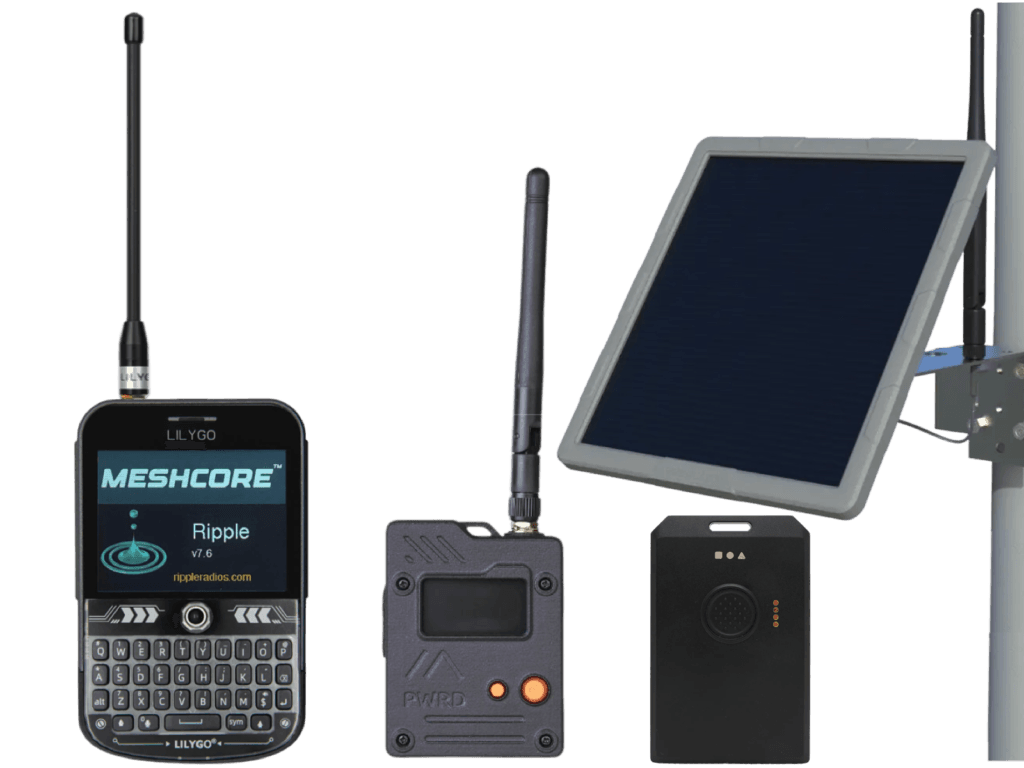
All devices work together on the same network. Most people start with one handheld device and one solar repeater, then expand as needed.
Getting Started Is Easier Than You ThinkMost customers send their first message within minutes:
Mesh networks like MeshCore offer Australians a powerful, independent way to stay connected when traditional infrastructure fails. Whether you’re preparing for emergencies, living remotely, or simply want more control over your communications, these systems provide practical, privacy-respecting connectivity that doesn’t rely on telcos or the internet.
At PrivacyPros, we stock a curated range of MeshCore devices pre-configured for Australian use and ready to join or start your own network.
Let’s make Australia more resilient.