Best Secure Phones for Australians: Enhancing Privacy & Data Protection in 2026

In today’s rapidly evolving landscape of digital threats, Australians confront serious obstacles to achieve a genuine ‘secure phone’.

Mandatory metadata retention laws force telco companies to keep records of your activities for 2 years, while Australian Border Force (ABF) officers are ramping up device checks at borders. Just in the first couple weeks of 2026, ABF intercepted 17 travelers with illegal content on their gadgets, highlighting how closely personal tech is being watched. Add to that the Online Safety Amendment Act’s new age verification rules starting December 2026 – which requires platforms like Google to check ages for logged-in users, making casual online browsing less private. With more and more Aussies worried about data privacy with growing demand for “smart” devices and “AI”, the risks of hacks and surveillance are higher than ever.

Picking a secure phone isn’t just smart – it’s a must for building strong digital defences.

This guide breaks down the best ways to choose a privacy-boosted secure phone in Australia, spotlighting models that block tracking from tech giants, carriers, and officials.

📈 The Imperative for Secure Phones in Australia

Your average phone from Google, Apple, or Samsung is constantly sending out “telemetry” data – like your location, app use, and even what your sensors pick up – often without your full okay. In Australia, the eSafety Commissioner’s strict online safety rules, combined with 2-year metadata storage requirements, crank up the dangers of identity theft, data leaks, and constant monitoring. A secure phone, usually de-Googled (free of Google’s tracking) and powered by a tough OS (Operating System – the brains that run everything), can cut this data sharing by up to 99%. They enable encrypted chats, anonymous web surfing, and built-in physical protections.

The upsides? Better resistance to cyber attacks, compliance with Australian Privacy Principles (APPs) by collecting less data, and no unwanted pre-loaded apps or invasive oversight by big tech. Data from 2026 shows more and more Australians ditching regular phones for de-Googled ones, with praise for GrapheneOS on Pixel devices for its proven, expert-approved security. Ideal for business pros fighting corporate spying, families curbing kids’ app addictions, or anyone pushing back against surveillance – these phones give you real online freedom.

Secure Phone PrivacyPros Australia 2026

🚨 Cyber Threats in 2026: Why Phone Security Matters More Than Ever

In the first half of 2025, Australia’s privacy watchdog, the Office of the Australian Information Commissioner (OAIC), recorded 532 major data breaches – that’s about one reported every eight hours. Hardest-hit areas included health (18% of cases), finance (15%), and government (10%). Experts predict a 15% jump in 2026 as hackers use smarter tools amid economic worries and global tensions.

AI is making attacks faster and sneakier. Globally, AI-helped cyber incidents rose up to 72% from 2024 to 2025, with smart tech creating fake emails and calls that trick people. In Australia, AI-driven phishing scams – fake messages to steal info – skyrocketed over 1,265%, often hitting phones via dodgy texts or apps that sneak through outdated software gaps. Ransomware – where hackers lock up data and demand money – stays the biggest destroyer: Australia’s Signals Directorate (ASD) handled 138 cases in 2024-25, up 58% globally year-over-year, often starting through weak links in supply chains or phones. Supply chain hacks, attacking connected companies, surged up to 2,600% in reports, while regular phishing with 16% of breaches.

The financial impact is huge: Australian groups faced an average $4.26 million per breach in 2025, up 5.7% from 2024 and 27% since 2020 – including lost customers, fines, and fixes. Globally, costs range from $4.44 to $5.08 million when AI slips through. Small businesses saw 8% higher cyber costs, often worsened by phone weak spots leading to bigger problems.

Phones are our everyday tools for banking, health info, and chats – but they’re easy targets. Without the latest protection, risks grow from app flaws, unlocked data, or AI-made fakes like deepfake videos.

Looking to 2026, we consider AI fakes could become the top worry over ransomware. Choosing secure phones with built-in privacy isn’t optional; it’s critical to staying safe online.

📜 Essential Criteria for Selecting a Secure Phone

Seek to balance elite protection with user-friendliness and compatibility with Aussie carriers. Opt for local expert support to make switching easy. Here’s a clear guide to help:

1. Operating System (OS): Opt for De-Googled and Open-Source Options

The OS is the core of your phone’s security – it controls how your data is protected. Skip standard Android, iOS, or Google versions that harvest your sensitive info, go for:

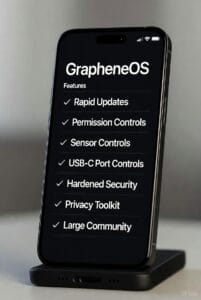
  1. GrapheneOS: The standout for 2026, featuring verified boot (a check for any tampering on startup), strengthened memory defenses, and per-app controls. It’s widely regarded as the leader for device security, has zero built-in tracking, and long-term updates – our choice at PrivacyPros for all secure Privacy Phones.
  2. Alternatives: CalyxOS for more hardware options or LineageOS for tweaks, but GrapheneOS wins in independent reviews and Aussie no-data-sharing rules. See our FAQ for a OS comparison.
  3. Pro Tip: Look for OS support for multiple profiles (GrapheneOS supports up to 32) so you can keep work, personal, and anonymous activities separate and track-free. An incredibly useful strategy – like having multiple phones in one. Switch in seconds.

2. Hardware Durability and Compatibility

De-Googling works best on certain hardware. Focus on:

  • Latest Google Pixels (Pixel 9/10 series): Best for GrapheneOS with bootloaders you can relock and has ongoing updates. The Pixel 10 includes a Tensor G5 chip for efficient power use, LTPO OLED screens for longer battery life, and 32% recycled materials – aligning with Australia’s sustainability goals.
  • Key Specs: At least 12GB RAM for smooth multitasking, 128GB+ storage for keeping apps separate, and big batteries (4970mAh or more). Essential: Physical switches to turn off mic, camera, or sensors for total privacy.
  • Aussie Essentials: Devices must work with local networks. Avoid carrier-locked phones; buy unlocked from reputable Australian sellers to get the full 2-year warranty under Australian Consumer Law (ACL). Always go new – refurbished phones carry considerable risks like hidden data from past owners (see our FAQ on ‘Is it Safe to use Old Phones?‘). If a seller skips the full 2 year OEM warranty, you’re likely exposed to these risks.

3. Advanced Defence Mechanisms

Seek out extras that amp up protection:

  • Controls for Sensors and Signals: Quick toggles for mic, camera, GPS, NFC, and USB to stop unwanted access – recommended by OAIC guidelines.
  • Anonymity Boosters: Easy integration with VPNs (like Proton VPN), Tor for hidden browsing, and panic PINs that wipe data if needed. Use zero-log apps for private messaging.
  • App Stores: Built-in open-source stores like F-Droid or Aurora for safe downloads. If you need Google Play, run it in a sandboxed (isolated) mode. Our Manuals guide you.
  • Patch Protocol: At least 5-7 years of security updates to handle new threats like ransomware.

4. Discreet Purchase and Configuration

Buying anonymously in Australia is tricky – no SIMs without ID for true “burners” – but there are ways around it:

  • Buying: Use cash or crypto for unlocked secure phones. Avoid linking to your bank.
  • Setup: Have pros configure it, link to anonymous emails (like Proton Mail), and use eSIMs or VoIP for calls without full ID. See our Guide: Anonymous Phone Numbers in Australia.
  • Legal Note: These phones don’t break laws – they actually help follow APPs by cutting data collection. Just minimise trails to comply with metadata rules.

5. Cost, Warranty, and Support

Plan for $2,000–$4,000 on premium new secure devices. Demand 2-year ACL warranties to confirm it’s not a risky refurb or import. Sellers with expert fortification add huge value, giving you ready-to-go usability without setup struggles. Avoid basic configs and weak support that leave you stuck.

🛡️ Best Secure Phone Picks for Australians in 2026

From 2026 trends and expert reviews, the top choices are de-Googled phones with GrapheneOS for unbeatable protection. This fits Aussies’ increasing need for tech that fights surveillance amid new threats.

GrapheneOS is the gold standard for 2026, with verified boot, hardened memory, and detailed permissions. It runs on Google Pixels minus Google services, but you can add sandboxed apps. Loved for zero tracking and 7-year updates – our choice for all secure privacy phones (See FAQ – What is GrapheneOS?).

Professionally sourced and tuned, these beat alternatives like Fairphone or Murena in audits and local fit. See our FAQ comparing these Operating Systems.

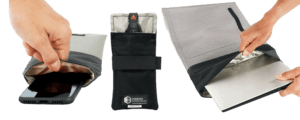
Amp up protection with Faraday bags to block signals on the go.
🚨 Key Traps to Dodge in Secure Phone Adoption
  • Functionality-Limiting Setups: Some sellers provide amateur configs and overdo restrictions; breaking apps and everyday usability – pick professional-balanced configs for smooth use.
  • Sole Dependence on VPNs: Tools like Proton or Mullvad (our Aussie favorites) help hide you, but they need a solid OS underneath.
  • Overlooking Verifications: Choose OSes with third-party audits to avoid sneaky weaknesses.
💡 Seize Your Digital Autonomy Now

In 2026, as personal data becomes the “the new gold,” a secure phone is your frontline defence. GrapheneOS on a Pixel delivers top protection without slowing you down.

For ready-to-use, fortified options, explore our secure Privacy Phones: they are locally sourced, come with 2-year OEM warranty, are professionally tuned, and packed with advanced protections.

Restore your online independence and safeguard your sensitive information.

PrivacyPros Australia privacy phone range 2026

🧰 Bonus: Explore Our Free Tools Library

We’ve put together a huge collection of vetted ‘Free Tools’ we recommend to supercharge your digital security. From beginner-friendly guides to handy apps, it’s all in simple language to make tech less intimidating. Jump in for practical ways to level up your privacy, security and anonymity!

private phone privacypros australia logo


Share
Related Articles
Loading...